


 4 min read
 Last updated: 17 Aug 2026
Many teams delay test automation because they assume meaningful value comes only after achieving broad test coverage. Our experience with AIVA taught us a different lesson: starting with a handful of meaningful end-to-end tests and expanding incrementally can create a powerful regression testing safety net over time.
A year ago, we started using AIVA to test AIVA.
There was no ambitious automation initiative. No target coverage percentage. No months-long effort to automate everything.
We started with just eight end-to-end tests.
At the time, we selected the most critical workflows from the user’s point of view. Each test represented a complete user workflow centered around a key AIVA feature. We made sure that every major tool involved in test creation (clicking, scrolling, text assertion, etc.) could be used to record a test, save it, and later execute it successfully with the expected outcome.
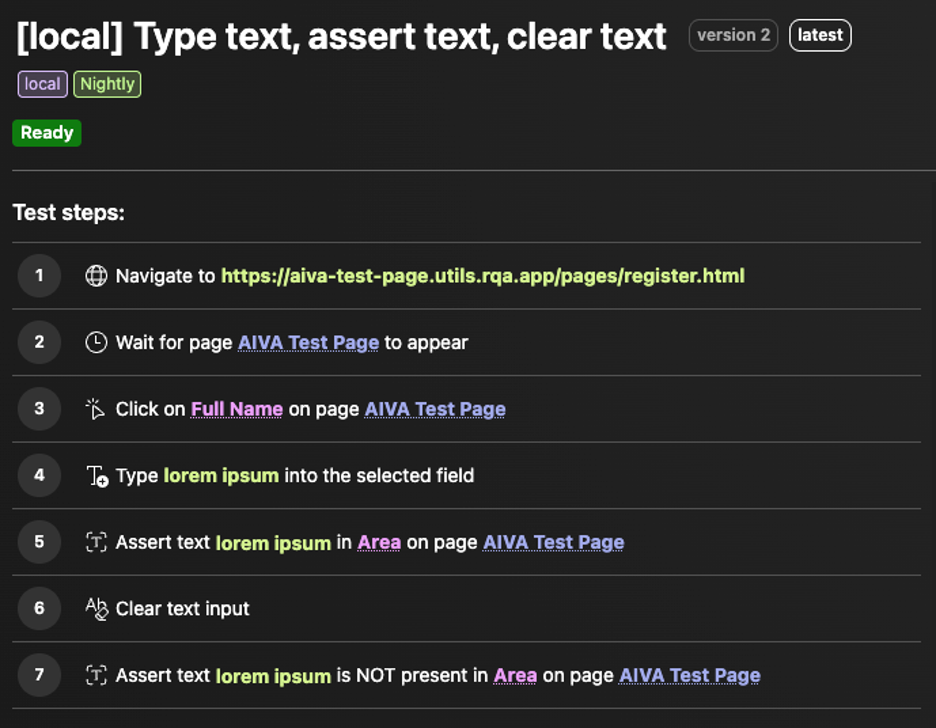
The goal wasn't to build a comprehensive safety net. The goal was simply to gain a little more confidence in the most important parts of the product.
What happened next taught us an interesting lesson about test automation and regression testing.
The Mistake Many Teams Make
When people discuss test automation, the conversation often starts with scale.
- How many tests do we need?
- Which areas should be automated?
- How much coverage is enough?
The implicit assumption is that automation only becomes valuable once you've reached some significant level of coverage.
This mindset creates an enormous barrier to getting started.
Teams imagine hundreds of tests, maintenance overhead, frameworks, infrastructure, flaky executions, and ongoing costs. The project feels so large that it is often postponed indefinitely.
Ironically, the push for completeness often prevents progress.
WE TOOK A DIFFERENT APPROACH
Instead of attempting to automate everything, we followed a simple rule: whenever we introduced a meaningful new feature, we created an automated test.
When a significant bug was discovered and fixed, we asked a different question:
How do we make sure this never happens again?
The answer was usually straightforward. We created a new regression test.
One bug fixed. One regression test added. One more layer of confidence for the future.
No dedicated automation projects. No massive backlog. We simply kept adding useful tests over time.
ONE YEAR LATER
Today, AIVA runs 66 automated end-to-end tests against itself. That's an increase of more than eightfold from where we started. Most of these tests validate complete user flows and key product capabilities, while a smaller number were added as targeted regression checks after significant bugs were fixed.
What's more interesting than the number itself is how we got there. The test suite grew naturally alongside the product.
• Every test was added for a reason.
• Every test solved a real problem.
• Every test represented either a critical workflow, a valuable feature, or a bug we did not want to see again.
Rather than attempting to predict all future risks, we continuously convert today's lessons into tomorrow's protection.
Why The First Tests Still Matter
One common concern often raised about building a regression safety net is whether it will remain useful as the product evolves. Many teams have experienced test suites that become fragile, outdated, and expensive to maintain.
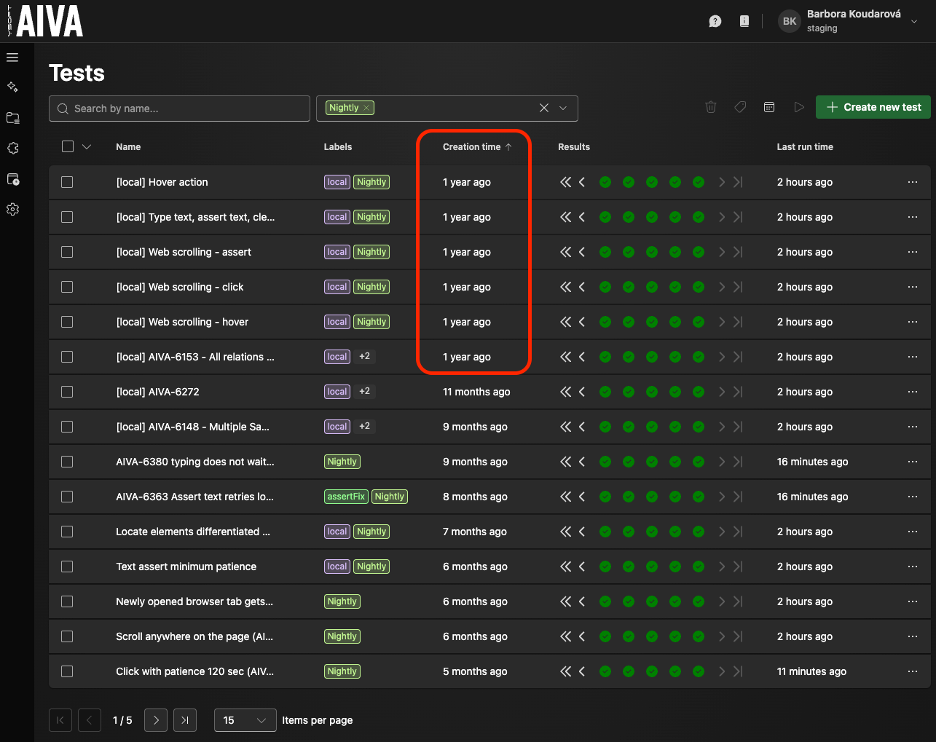
Our experience has been different. Several of the very first tests we recorded a year ago are still part of our suite today. Even after major product changes, feature additions, UI improvements, and countless releases, those original tests continue to provide meaningful results. Part of that comes from how simple maintenance has remained through features such as one-click test updates.
This is exactly what we hoped test automation would achieve; not a collection of scripts that constantly need repairs, but a growing set of automated checks that continue to bring value over time.
coverage isn't built all at once
Looking back, the biggest lesson isn't that we reached 66 tests. The lesson is that we never tried to reach 66 tests in one push.
We focused on creating the next useful test.
Then the next one.
And the next.
Over time, those small investments accumulated into something substantial.
This is how many successful products are built. It's also how sustainable test automation is built. Through continuous improvement, not through a giant initiative.
START SMALLER THAN YOU THINK
Many teams delay automation because they believe they need a detailed strategy or a significant time investment at the start.
Our experience suggests the opposite. Start with your most important workflow.
• Record one test.
• When you ship a new feature, add another.
• When you fix an important bug, add a regression test so it stays fixed.
A year from now, you may be surprised by how much confidence those small steps create.
We started with eight tests. Today, AIVA validates itself through sixty-six automated checks that mimic real user interactions. The confidence this gives us is invaluable.
It’s not about the number. That was never the success metric. The real achievement is proving that effective test automation can grow gradually, naturally, and sustainably.
Because sometimes the best automation strategy is simply to start.